
How to Design a Garden from Scratch in 17 Expert Steps
Starting from a blank canvas can be daunting, but learning how to design a garden from scratch is a rewarding journey. Whether you have a compact city patio or a countryside escape, these 17 expert-backed steps will help you turn your outdoor space into a beautiful and functional sanctuary.
Looking for garden ideas for specific spaces? Explore our best front garden ideas or tiny garden design tips to inspire your project.
1. Define Your Garden Wishlist
Start by identifying your needs: dining area, children’s play zone, vegetable beds, or a shaded retreat. Write down your top priorities and shape the design around them.
2. Analyse Light and Shade
Spend a few days observing the sun’s path. Where does it shine in the morning or fade in the evening? This knowledge helps determine the best spots for seating, flower beds, or shade-loving plants.
3. Understand Your Soil
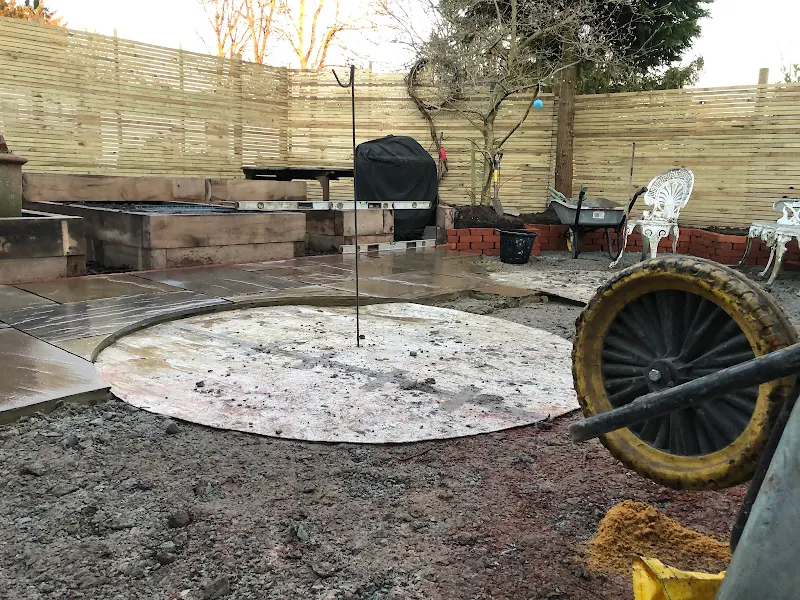
Dig a test hole and feel your soil. Is it sandy, loamy, or clay-heavy? Amending poor soil with compost is essential for long-term planting success. Here’s how to test and improve your garden soil.
4. Choose a Style That Matches Your Taste
Will your garden be formal and geometric, or loose and natural? A clear style early on helps narrow plant choices and hardscape layouts. Modern homes suit sleek designs, while cottages suit lush borders.
5. Add Strong Structural Features
Your garden’s bones matter. Include patios, pergolas, pathways, trellises, or retaining walls. These elements give shape, flow, and purpose to every section.
Thinking about patios? Learn more about professional patio installation.
6. Zone the Space Smartly
Divide your garden into clear zones: lounging, cooking, planting, etc. Use edging, hedges, or different floor materials to define areas without clutter.
7. Select Your Hard Landscaping Materials
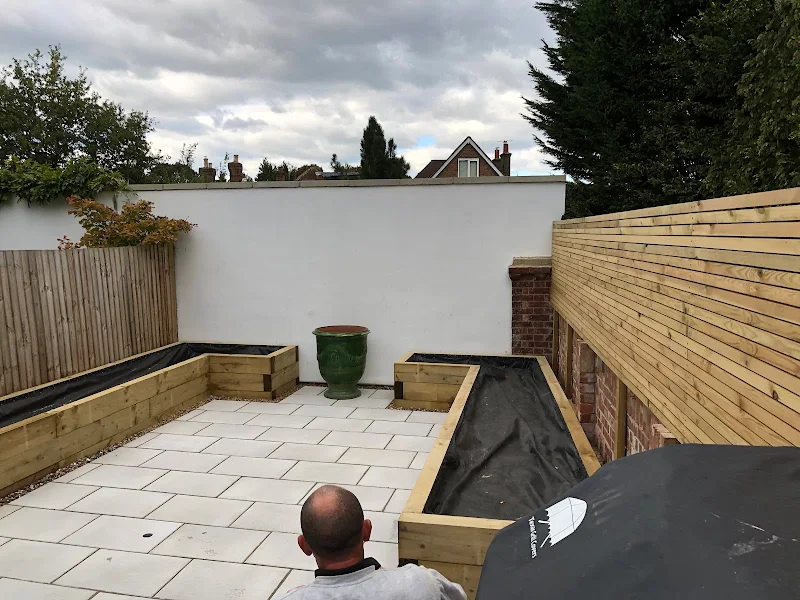
Gravel, sandstone, bricks, or wood, limit yourself to 2–3 materials that suit your home and climate. This creates cohesion and keeps maintenance low.
8. Plan Purposeful Pathways
Paths guide movement. Curved paths bring a relaxed flow, while straight lines introduce formality. Stepping stones over lawns add charm.
9. Create One or More Focal Points
A garden needs anchors. Sculptures, feature walls, flowering trees, or fountains all draw the eye and create visual interest.
10. Develop a Cohesive Planting Scheme
Use the “front–middle–back” principle: tall plants at the back, medium in the middle, low at the front. Repeat your palette to create rhythm.
11. Plant for All Seasons
Include evergreens, spring bulbs, summer blooms, and autumn foliage. A good garden offers colour and interest year-round.
12. Add Raised Beds or Containers
Perfect for renters or small spaces, containers and raised beds are great for herbs, flowers, and vegetables. See our raised garden bed inspiration.
13. Use Vertical Space
Arches, pergolas, and obelisks add height. Climbing roses or clematis help narrow gardens feel more lush and layered.
14. Install Garden Lighting
From solar path lights to feature spotlights, outdoor lighting extends usability and adds ambiance. Always plan electrical needs early.
15. Welcome Wildlife
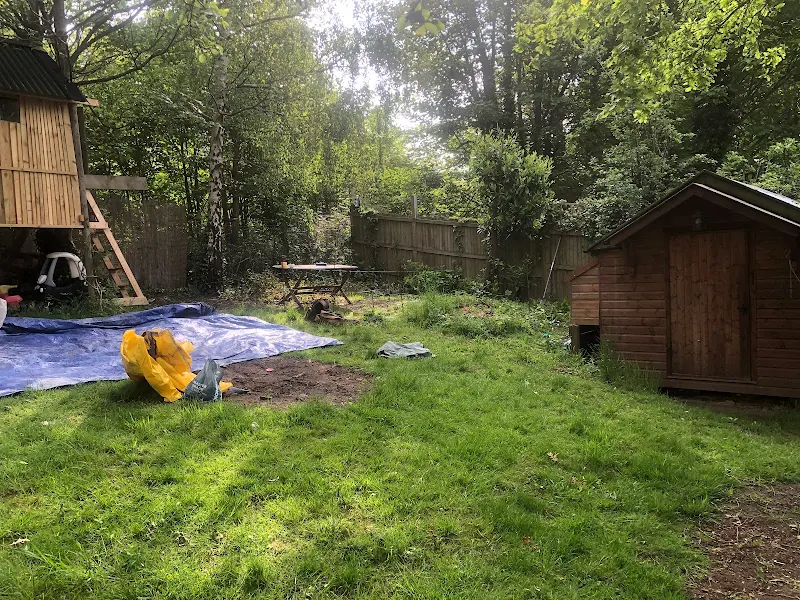
Add bee-friendly flowers like lavender and echinacea. Bird baths, bug hotels, and pollinator-friendly plants make your garden more vibrant.
16. Include Personal Touches
Style your garden with what you love, vintage lanterns, a statement bench, a mosaic table. Your personality should shine through.
17. Allow Your Garden to Evolve
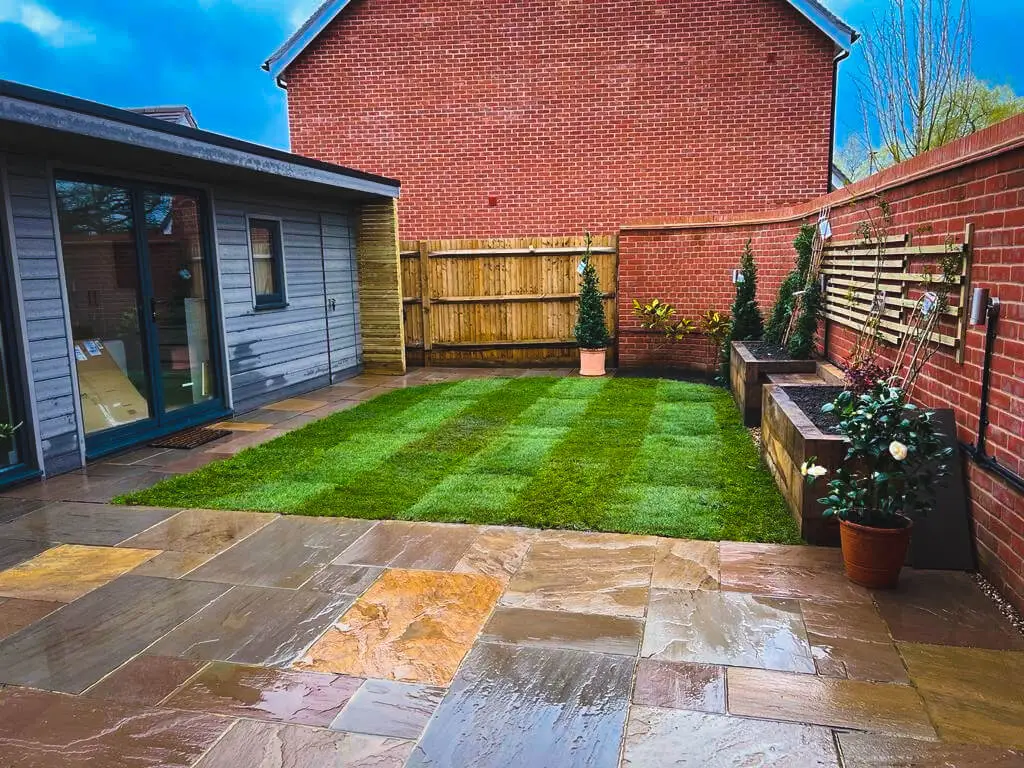
No need to do it all at once. Gardens grow and change. Start with key structures and let your space develop as your confidence builds.
Frequently Asked Questions
How do I know what garden style suits my home?
Let your home’s architecture guide you. Contemporary homes pair well with clean, minimalist lines. Traditional homes match cottage-style or layered planting.
Can I Design a Garden from Scratch a professional?
Absolutely. Many successful gardens are DIY. However, for drainage, grading, or paving, consider working with our expert landscaping team.
What are the best low-maintenance garden features?
Focus on evergreens, gravel pathways, hardy perennials, and minimal lawn. Avoid intricate water features or high-maintenance borders.
When should I plan garden lighting?
At the very start. It’s best to install wiring before landscaping is complete to avoid disruption.
Ready to Create the Garden You’ve Always Dreamed Of?
You now know how to design a garden from scratch, step by step. Whether your vision includes lush borders, a sculptural patio, or a peaceful retreat, we’re here to help you bring it to life.
Book a free consultation with our expert design team today.
Browse our landscaping services to explore what’s possible.
